Tulip Bulb #24754 - Darwin Hybrid, Red Impression
Red Impression is one of the most dependable Darwin Hybrid tulips in production, and Bulb #24754 is a strong representative of the type. This cultivar profile covers planting requirements, seasonal timing, field performance, suitability for different markets, and the practical details a grower needs before committing stock space. We treat bulb profiles the way a working catalogue should: with enough detail to inform a planting decision, not just a purchase impulse. For broader coverage of flower cultivation and sourcing, see our Flowers & Bulbs hub.
Cultivar Overview
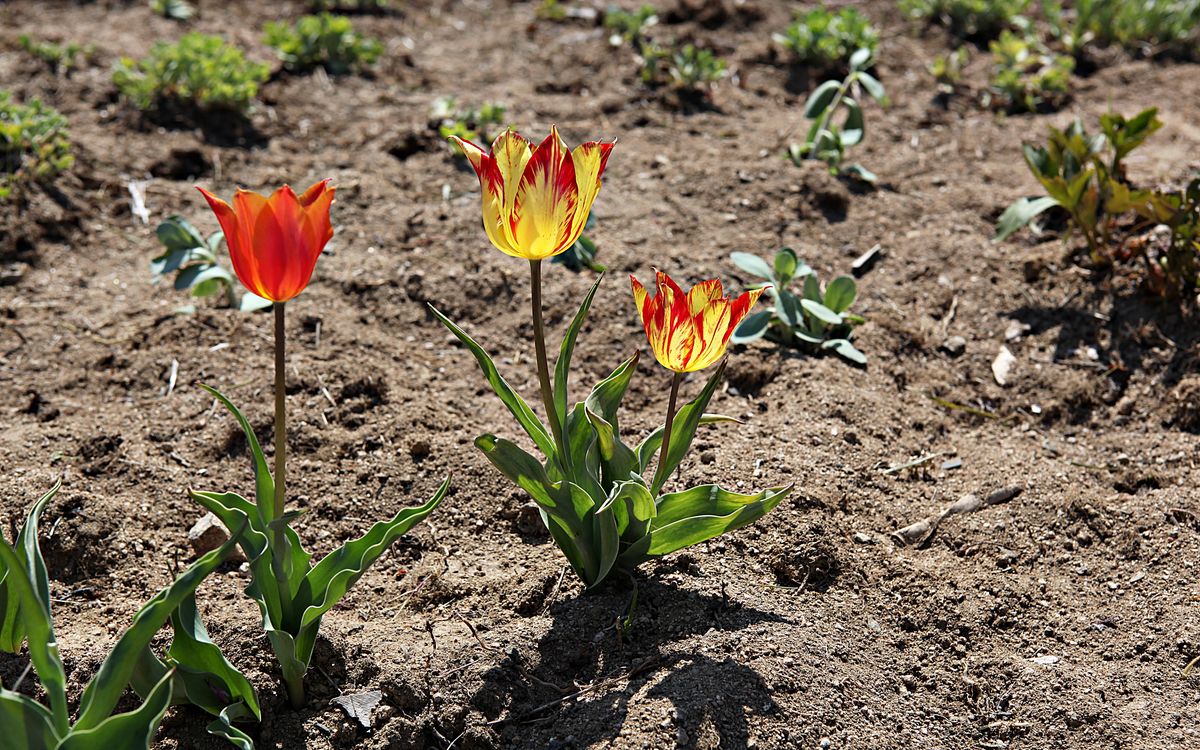
Red Impression belongs to the Darwin Hybrid group, which sits among the most commercially reliable tulip classes. The Darwin Hybrids were originally bred by crossing single late tulips with Tulipa fosteriana, and the result is a class that delivers large, sturdy blooms with excellent vase life and strong stems. Red Impression specifically produces a deep, saturated red flower with a slight sheen, standing between 50 and 60 centimetres at maturity. The bloom form is classic goblet, opening gradually and holding shape well in both field and forced conditions.
What makes this cultivar particularly useful for growers is its consistency. Year after year, Red Impression delivers uniform colour, reliable stem height, and predictable bloom timing, which matters enormously when you are cutting for a specific market window or filling standing orders for florist clients.
Planting Requirements
Soil. Well-drained, moderately fertile soil with a pH between 6.0 and 7.0. Heavy clay soils need amendment before planting, because waterlogged conditions will rot bulbs before they establish. Sandy loams work well with minimal preparation.
Depth. Plant at approximately 15 centimetres deep, measured from the base of the bulb to the soil surface. In colder regions, err toward 18 centimetres for additional frost insulation.
Spacing. For cut flower production, 10 to 12 centimetres between bulbs in the row gives strong stem development without excessive competition. Bed width depends on your harvesting method, but 1.2-metre beds with four to five rows are standard for hand-cut operations.
Timing. Plant when soil temperatures have dropped consistently below 15 degrees Celsius, typically between late September and mid-November depending on region. Planting too early, when soil is still warm, invites fungal issues. Planting too late risks insufficient root development before hard frost.
Vernalisation. Like all Darwin Hybrids, Red Impression requires a sustained cold period (at least 12 to 14 weeks below 9 degrees Celsius) to initiate proper bloom. Forced production in greenhouses can use pre-cooled bulbs to compress this timeline, but field growers rely on natural winter cold.
Seasonal Growing Notes
Autumn (planting). The critical season. Bulb quality at planting determines almost everything about spring performance. Inspect bulbs on arrival for firmness, mould, and mechanical damage. Discard any bulb that feels soft or shows blue-green mould at the basal plate.
Winter (dormancy). Minimal intervention needed after planting. Mulch with straw or bark chips if your region experiences freeze-thaw cycling that heaves soil. Monitor drainage after heavy rain events.
Spring (growth and bloom). Emergence starts as soil temperatures rise above 5 to 7 degrees Celsius. Red Impression typically blooms in mid to late April in temperate zones, though greenhouse forcing can advance this by four to six weeks. Once shoots appear, watch for botrytis (grey mould) during wet spells. Good airflow between plants reduces risk significantly.
Post-bloom (lifting and curing). If you are saving bulbs for replanting, allow foliage to die back naturally before lifting. Cure bulbs in warm, dry conditions (20 to 25 degrees Celsius) for at least two weeks before grading and storing.
Suitability and Market Notes
Red Impression performs well in several contexts:
- Cut flower production. Strong stems, excellent vase life (typically 7 to 10 days post-cut), and the classic red colour that maintains demand across florist markets. Harvest when the bud is coloured but still closed for maximum post-harvest life.
- Landscape and display. Striking in mass plantings. The uniform colour and height create clean visual blocks. Works well as a single-cultivar display or anchoring a mixed border.
- Forced production. Responds reliably to standard Dutch forcing protocols. Pre-cooled bulbs can be brought into bloom for Valentine's Day or early spring markets, which commands premium pricing in most regions.
- Direct retail. Recognisable, unpretentious, and easy to sell. Customers respond well to a straightforward red tulip that looks exactly like what they imagine when they hear the word tulip.
Buying and Payment Context
For growers ordering Red Impression or similar cultivars at wholesale scale, a few practical considerations apply:
Order timing. Most Dutch and regional bulb suppliers open pre-orders in January through March for autumn delivery. Popular cultivars like Red Impression can sell out at the best grades. Early ordering secures better bulb calibre.
Grading. Bulb size is graded by circumference in centimetres. For cut flower production, 12/+ grade (12 centimetres or larger) is standard. Smaller grades work for landscape but produce shorter stems and smaller blooms.
Payment windows. Wholesale bulb orders typically require partial payment at order and balance before or on delivery. If you invoice in Bitcoin, factor in settlement timing. A Bitcoin payment initiated on Monday may not reflect cleared fiat in your account until Wednesday, depending on your conversion setup. That matters when your supplier expects payment to arrive within a tight window. For more on this, see our guide to Bitcoin for Seasonal Businesses.
Shipping and handling. Bulbs are shipped dry and should be stored in cool, dry conditions (below 20 degrees Celsius) until planting. Extended storage above 25 degrees can degrade bulb quality and delay rooting.
Frequently Asked Questions
Can Red Impression be naturalised?
Darwin Hybrids are among the best tulips for naturalising, and Red Impression performs reasonably well if left in the ground. However, commercial growers usually lift and replant annually because bulb size and bloom quality degrade after the first year in most growing conditions. For landscape plantings where you are less concerned about uniform commercial quality, naturalising can work for two to three seasons.
What is the expected vase life?
When harvested at the correct stage (bud showing colour, not yet open), Red Impression typically delivers 7 to 10 days of vase life at room temperature. Cooler display conditions extend this. Adding floral preservative to the water helps, but clean water changed every two days works nearly as well for a home setting.
Is this cultivar resistant to tulip fire?
No tulip cultivar is fully resistant to Botrytis tulipae (tulip fire), but Darwin Hybrids as a class tend to be more robust than many other groups. Good cultural practices, including proper spacing, avoiding overhead irrigation during emergence, and removing infected material promptly, are more effective than relying on cultivar tolerance alone.
What alternatives exist if Red Impression is unavailable?
Within the red Darwin Hybrid range, Apeldoorn and its derivatives offer similar performance. Oxford is another reliable option. For a slightly different colour temperature, Ad Rem provides an orange-red that appeals to some markets. All three share the sturdy stem and reliable forcing characteristics of the Darwin Hybrid class.
Field Observations
We have tracked Red Impression performance across several seasons and growing setups. A few consistent patterns are worth noting:
Bulbs planted in raised beds with improved drainage consistently outperform those planted in flat field rows, particularly in seasons with above-average autumn rainfall. The height difference at bloom can be 5 to 8 centimetres, which matters for cut flower value.
Forced bulbs brought into a heated greenhouse in January reach marketable bloom roughly 3 weeks earlier than standard greenhouse production and 5 to 6 weeks ahead of field-grown stock. The trade-off is energy cost. For growers exploring mining heat as a supplemental heat source for forcing, the temperature range is a reasonable match because forced tulips want 15 to 18 degrees Celsius during the growth phase, which is well within the range that a managed mining heat system can deliver.
Colour stability under greenhouse lighting is excellent. Some red cultivars shift toward pink under certain artificial light spectra, but Red Impression holds its colour well across common greenhouse lighting setups.